


UCHPA, THE MOVIE
Updated: May 13
Rating: 3.5/5 | By Sandro Mairata @smairata / REFLEKTOR
““A powerful incursion into the Peru made possible by this Quechua-speaking rock band.””

There are many values in Uchpa, The Movie, a biographical film about this ‘Quechua rock blues’ band from Ayacucho, formed in 1993 by Fredy Ortiz and Igor Montoya from Andahuaylas. Ortiz, the long-haired leader with a hippie-shamanic air, is the son of an evangelical pastor and a local landowner. His first vocation was to be a police officer, and he fought against Shining Path terrorism as part of the then Republican Guard, risking his life on several occasions. That is what this film is about: the life of Ortiz, the formation and adventures of Uchpa, the identity of the Quechua language, and the years of the Internal Armed Conflict.
Any Peruvians there taking issue with the term “internal armed conflict,” rejected by those who prefer the reductionist term “terrorism” to hide the brutalities of our armed forces? Hear it from Ortiz himself, who was there, watching his fellow police officers lose their lives in the deadly Ayacucho of those years and firing himself at the terrorist hordes. Or look at his photos, which back up his words, or listen to his fellow police officers who survived hell and who are clear about one thing: it was an Internal Armed Conflict. The name of Ortiz’s gang, “Uchpa,” means “ash,” in memory of what was left of everything touched by violence in those times that should never return.
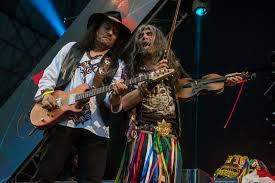
Antonio Rodríguez Romaní wrote the script for this documentary, as well as producing, filming, editing, and directing it with meticulousness, interspersing scenes from a recent live show at the Gran Teatro Nacional with the stories of the band’s protagonists. There are two more or less clear halves: first, the story of Fredy Ortiz and his conversion from police officer to rock musician convinced of his mission (“we don’t rock the Andes, we Andeanize the West”), and then the story of Uchpa itself and its vicissitudes over the years.
Uchpa, The Movie tells stories that are both entertaining and delicate, as well as others that are hard to believe, such as that of police officer Mariano Zamora, who was arrested, tortured, crucified, and dug his own grave, all because his girlfriend had a lover—also a police officer—who, to get rid of him, accused him of being a Shining Path member. Or when police officers killed each other over silly disputes (“nobody talks about that”) or threw grenades at each other and played Russian roulette for no reason.

With high aspirations and such interesting material, Rodríguez unfortunately fails to demonstrate a particular visual language or cinematographic style with any distinctive hallmark: the product is efficient and well finished, but average. Another point against it is the trajectory of Uchpa itself, a band much loved on the national rock scene but with limited original output in more than thirty years—the albums Wayrapin qaparichkan (Screaming in the Wind), 1991, and Qauka kausay (Living in Peace), 1995, were little more than cassette demos, and their classic Qukman muskiy (I Breathe Differently), released in 2000, is their last original production in a proper form.
For this reason, this biopic does not cover years of musical evolution but rather pays tribute to the survival of these pioneers in a eulogistic tone. It celebrates the fusion of instruments, the inclusion of Quechua, the arrival of the scissor dancers on stage and, for the most fanatical fans, it examines the end of the first line-up and the arrival of Marcos Maizel, who has co-led the band since 1999 – including his days of drugs and excess, his recovery and the inclusion of his son David Maizel as second guitarist. But the film is essentially about Fredy, about his way of composing with whistles and the creation of the Uchpa sound, based on distorted guitars à la Rage Against The Machine (it was a time when other bands such as La Sarita and D’Mente Común also copied the sound) and rhythmic beats that were equally huayneros, martial, and tribal.
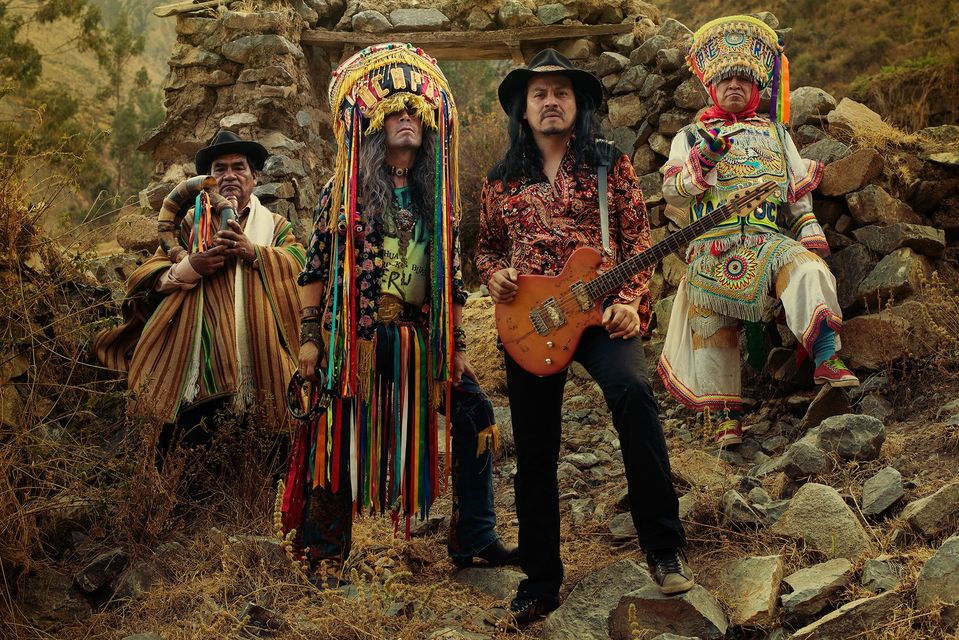
The tribute to Uchpa and the origins of his music, the stories of the Andes, and the memories of surviving the Internal Armed Conflict are well deserved. And in times of other biopics of Peruvian popular culture—Dina Páucar, Los Mirlos, Los Wembler’s, La Chola Chabuca, soon Susana Baca—if this film wasn’t made now, it would never be made. At times, the story is not about Uchpa, but about the Peru that made it possible. This is not a flaw, but quite the opposite.
And I haven’t even told you about “Sergeant Caca.” You must see that.
Year of Release: | 2025 |
Director | Antonio Rodríguez |
Producer | |
Cast | Fredy Ortiz Carrasco (self) |
IMDB |

Comments